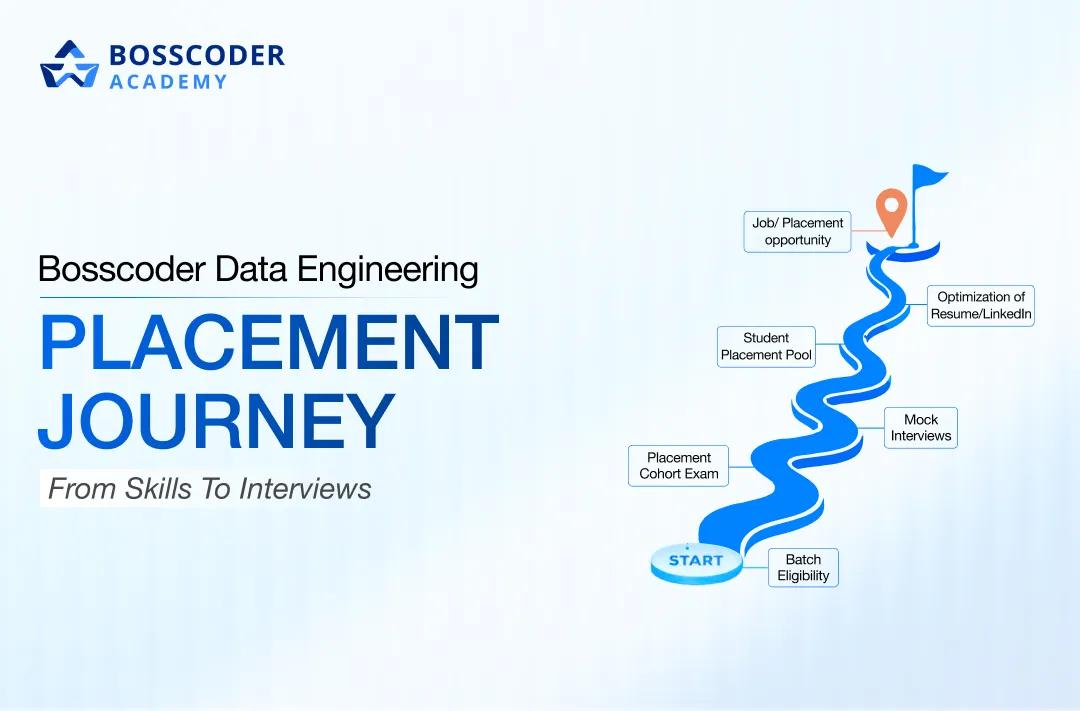
Learning Data Engineering is not only about completing a course or adding tools to a resume. For working professionals, the bigger challenge is turning technical knowledge into job-ready skills, relevant projects, a strong professional profile and interview confidence.
That is the approach behind the Bosscoder Data Engineering placement journey. The program combines a structured Data Engineering curriculum with live classes, 1:1 mentorship, assignments, hands-on projects, interview preparation and dedicated placement support.
The goal is to create a clear path from learning Data Engineering skills to becoming interview-ready.
1. Start with the right Data Engineering skills
A Data Engineer needs more than knowledge of one tool. Modern data systems involve programming, databases, data pipelines, distributed processing, cloud platforms and system design.
The Bosscoder Data Engineering curriculum is structured across programming, Data Engineering fundamentals, Data Engineering tools, cloud technologies, focused DSA and GenAI & agentic systems.
The journey begins with SQL and Python. The programming module covers SQL concepts such as joins, aggregation, CTEs, subqueries, window functions and recursive CTEs, while Python includes programming fundamentals, OOPs, NumPy, Pandas and data visualisation.
These fundamentals are important because technical interviews often test whether a candidate understands the underlying concepts rather than simply knowing how to use a particular platform.
2. Build Data Engineering fundamentals
After programming, learners move into the foundations of data systems.
The curriculum covers DBMS, data warehousing and data modelling, including relational and NoSQL databases, ACID properties, OLTP vs OLAP, star and snowflake schemas, SCDs, indexing, clustering, sharding and query optimisation. It also introduces tools such as DBT and Airflow.
This foundation helps learners understand why a data system is designed in a particular way, not just which tool is being used.
That matters during interviews, where candidates may be asked to explain data modelling decisions, pipeline architecture, database choices or optimization approaches.
3. Move from concepts to real Data Engineering tools
Once the fundamentals are in place, the program moves into the tools used for building and managing modern data systems.
The curriculum includes DBT, Apache Airflow, Fivetran, Snowflake, BigQuery, Databricks, Hadoop, Apache Spark and Apache Kafka. It also covers batch vs streaming architectures, data flow from ingest to processing and storage, scalability and fault tolerance.
Cloud learning is another part of the journey, with coverage of AWS, GCP and Azure, along with DevOps concepts such as CI/CD, Terraform, Docker and Kubernetes.
This progression gives learners a structured path instead of having to decide independently which of the many Data Engineering tools to learn first.
4. Use projects to turn skills into practical experience
One of the most important steps in a Data Engineering career transition is being able to demonstrate what you can actually build.
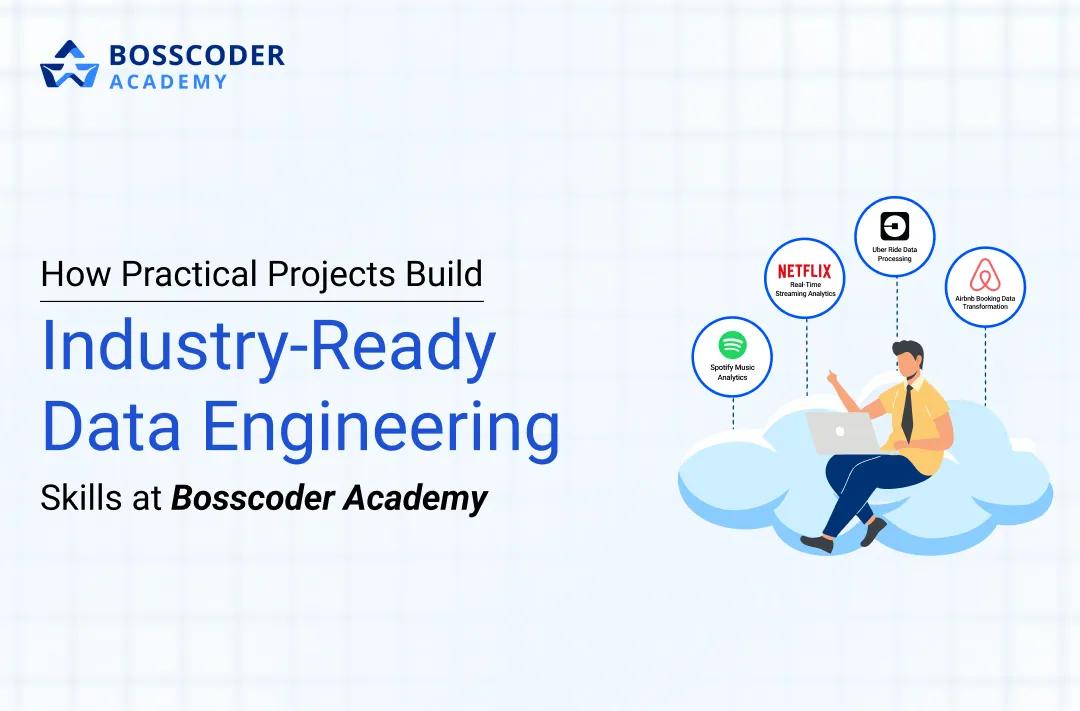
The brochure includes projects covering different Data Engineering scenarios, including:
- Tesla Vehicle Telemetry ETL Pipeline using Amazon S3, Airflow and Snowflake
- Airbnb Booking Data Transformation using DBT and Snowflake
- Netflix Real-Time Streaming Analytics using Kafka and Spark Streaming
- Spotify Scalable Music Analytics using BigQuery
- Uber Ride Data Batch Processing using Hadoop
- Goldman Sachs Stock Market Data Analysis using Python
- Amazon Prime Customer Churn Prediction
- Walmart Sales Analytics Dashboard using SQL
The bosscoder data program also describes hands-on project work and 1:1 mentor discussions for project improvement.
This is important for placement preparation because projects can give candidates concrete examples to discuss during technical and behavioural interviews.
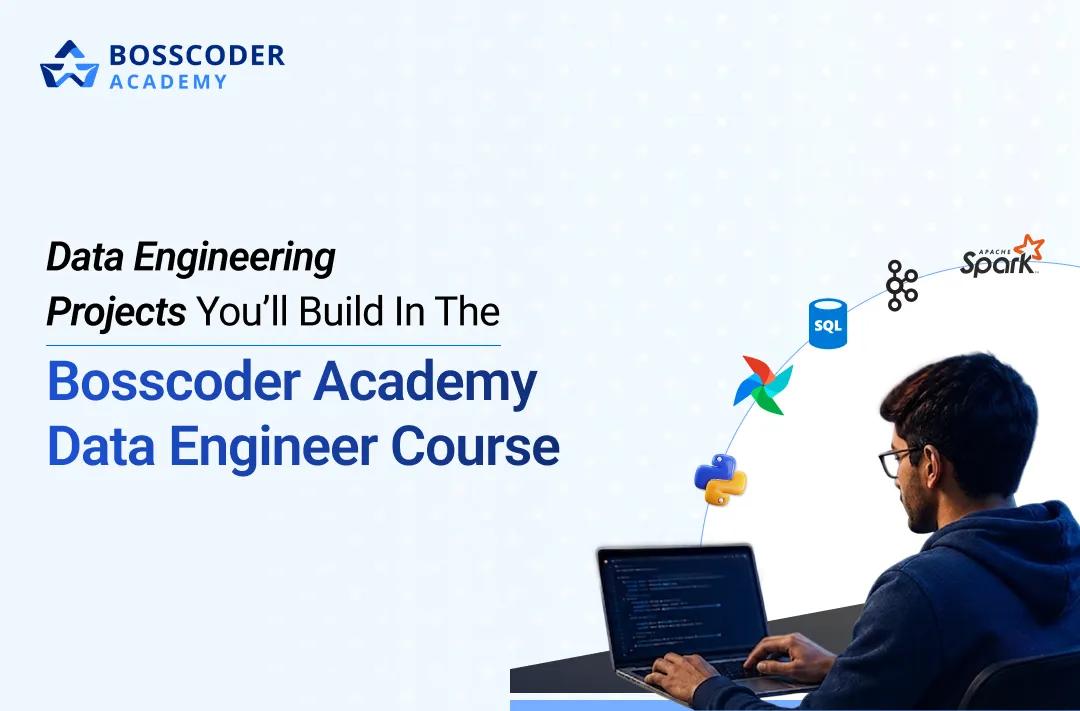
Want to see these Data Engineering projects in action?
Explore the Data Engineering projects you can build in the Bosscoder Academy Data Engineer Course.
5. Prepare specifically for Data Engineer interviews
Technical skills are only one part of getting through the hiring process.
Bosscoder includes a focused DSA module for Data Engineers, covering areas such as arrays, strings, binary search, recursion, sorting, hashing, linked lists, trees, dynamic programming and graphs. The brochure describes this module as focused on the DSA needed for Data Engineering interviews at product companies.
The placement journey also includes mock interviews and personalised feedback. The brochure says mentors provide mock interviews, feedback on areas that need improvement and guidance on what to practice before being interview-ready.
This creates an important transition:
Learn → Practice → Build → Get feedback → Prepare → Interview
rather than treating placement preparation as something that starts only after the curriculum ends.
6. Build a profile that recruiters can find
Before applying for Data Engineering roles, candidates also need a professional profile that communicates their skills clearly.
Bosscoder's placement support includes resume building, LinkedIn optimization and curated job profiles. The official career outcomes page describes profile building as the first step in its placement-support approach, including ATS-friendly resumes and optimized LinkedIn profiles.
The brochure similarly highlights an ATS-friendly resume and LinkedIn optimization as part of its placement process.
For a Data Engineer, this means presenting relevant skills such as SQL, Python, Spark, Kafka, Airflow, cloud and data modelling alongside projects and measurable work.
7. Move from preparation to opportunities
Once a learner is interview-ready, Bosscoder's placement support extends into referrals and company connections.
The brochure describes three stages: profile building, referrals and company tie-ups. It states that mentors and instructors support the referral process, while the program has company tie-ups and shares relevant hiring requirements.
The current official career outcomes page lists 500+ hiring partnerships, curated job opportunities and interview connections.
The key point is that placement support is presented as a process rather than a single interview-preparation session.
What do the career outcomes show?
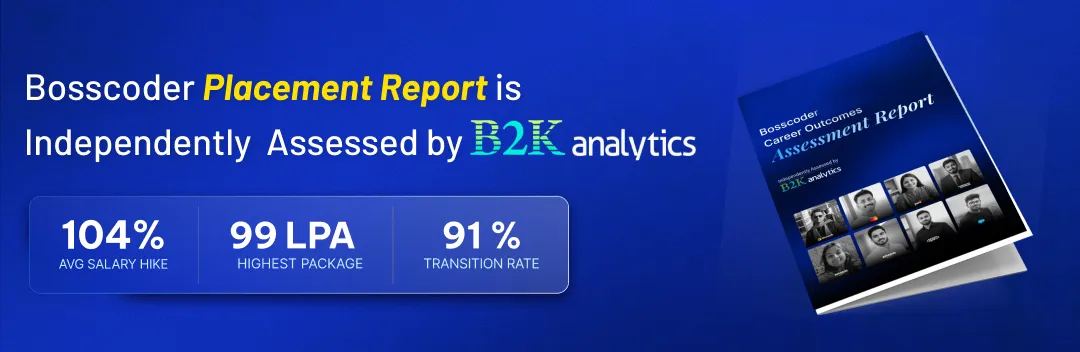
Bosscoder's current career outcomes page reports that 87% of learners in its DS & DE charter successfully transitioned into Data Science and Data Engineering roles. The independent assessment by B2K Analytics covered 1,299 learners across Software Engineering and Data tracks and used documented compensation details and verified offer information in its assessment process.
It is important to understand what this number means: 87% is the reported transition rate for the combined DS & DE charter, not a Data Engineering-only placement rate.
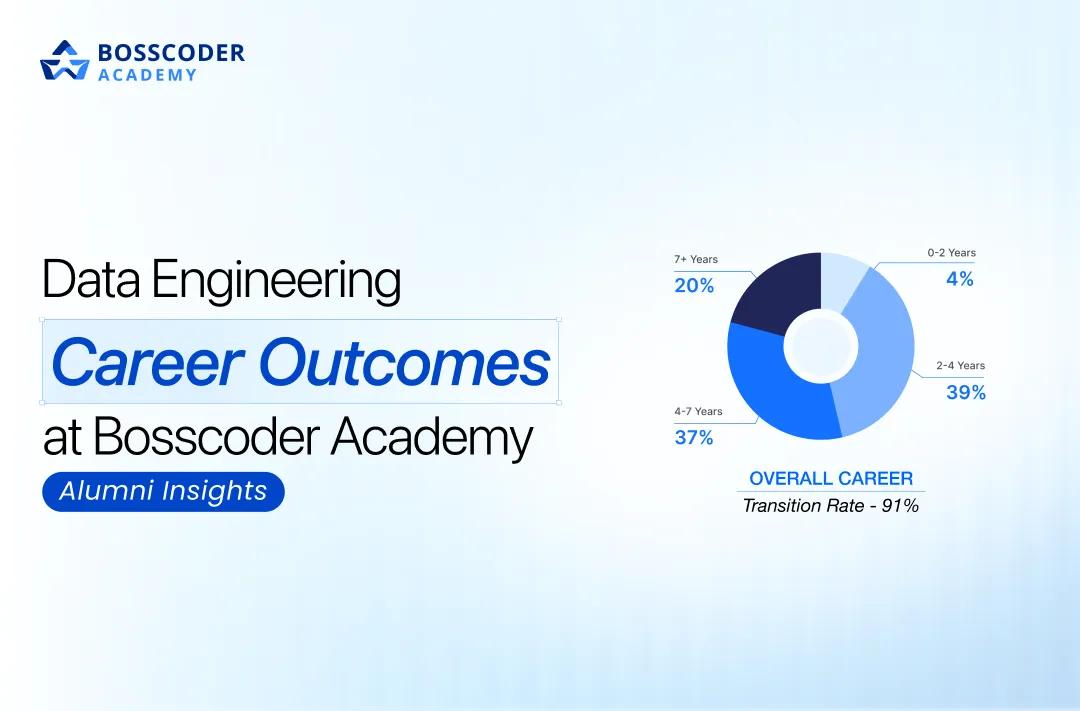
The Data Engineer program currently also highlights a 91% placement percentage, ₹23 LPA average package, 104% average salary hike and ₹99 LPA highest package, with the figures marked as independently assessed by B2K Analytics.
Because outcomes depend on factors such as prior experience, skills, preparation and the job market, these figures should be viewed as reported historical outcomes, not a guarantee of an individual placement or salary.
From learning Data Engineering to becoming interview-ready
The Bosscoder Data Engineering placement journey is therefore built around more than simply completing a curriculum.
It follows a progression:
- SQL & Python
- Data Engineering Fundamentals
- Tools & Cloud
- AI & GenAI
- Industry Projects
- DSA
- 1:1 Mentorship
- Career Preparation
- Mock Interviews
- Job Opportunities
For working professionals trying to move into Data Engineering, this structure can help bring together the technical learning and career preparation required for a job switch.
The value of a Data Engineering program is ultimately not just the number of technologies listed in its syllabus. It is how effectively those skills are converted into projects, confidence, a stronger profile and interview readiness.
That is where Bosscoder's combination of structured learning, 1:1 mentorship, hands-on projects and placement support is designed to fit into the Data Engineering career transition.
FAQs About the Bosscoder Data Engineering Placement Journey
Q1. What does the Bosscoder Data Engineering program cover?
The Bosscoder Data Engineering program covers SQL, Python, Data Engineering basics, Data Engineering Tools, Cloud Technology, Focused DSA, GenAI and Agentic Systems, Hands on Project, 1:1 Mentorship and Career Readiness.
Q2. How does Bosscoder help with Data Engineering interview preparation?
Bosscoder offers interview preparation through focused DSA for Data Engineers, Mock Interviews, 1:1 Mentorship, Doubt Support and Personalized Feedback. With this, learners will be able to identify their weaknesses and prepare for their Data Engineering interviews.
Q3. Does Bosscoder provide placement support for Data Engineering?
Yes. The placement process is structured around the profile building, resume/LinkedIn Optimization, Referral Process, company connection, job opportunities, and Interview Prep. The program is designed to take learners from technical preparation to job opportunities.
Q4. What are the placement outcomes of the Bosscoder Academy program?
Currently, the program at Bosscoder offers the following placement results – 91% placement rate, ₹23 LPA salary on average, 104% salary increment on average, and ₹99 LPA highest salary. All the above data has been marked as independently evaluated by B2K Analytics.